
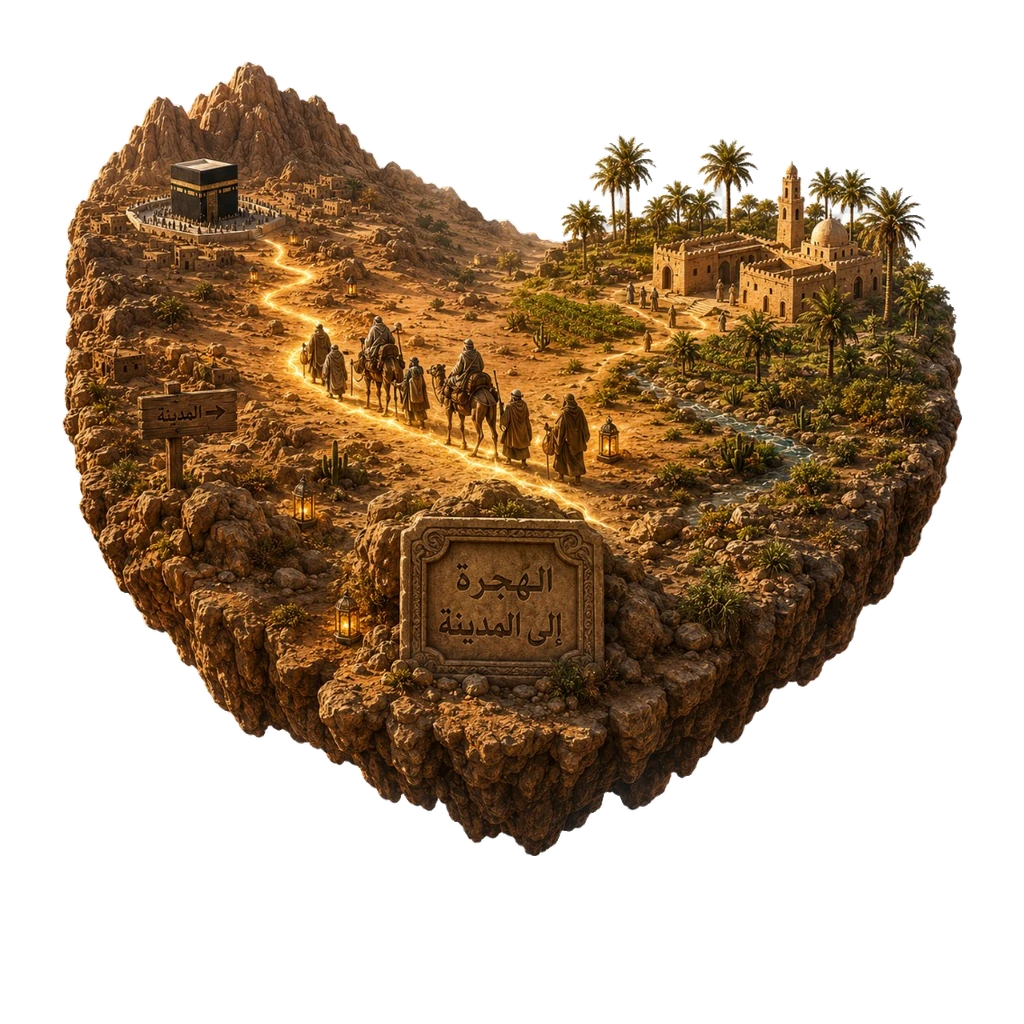
The Prophet's ﷺ emigration (Hijrah) to Madinah
The Prophet Muhammad ﷺ migrated from Makkah to Madinah in Rabi‘ al-Awwal of the first year of the Hijrah. This marked the start of a new stage in the Prophet’s biography.


صفحة تفاعلية تعرض أحداث هذه المرحلة في مسار بصري موحّد مع خريطة السيرة، مع صور رمزية لكل حدث دون تصوير للنبي ﷺ أو الصحابة.


The Prophet Muhammad ﷺ migrated from Makkah to Madinah in Rabi‘ al-Awwal of the first year of the Hijrah. This marked the start of a new stage in the Prophet’s biography.

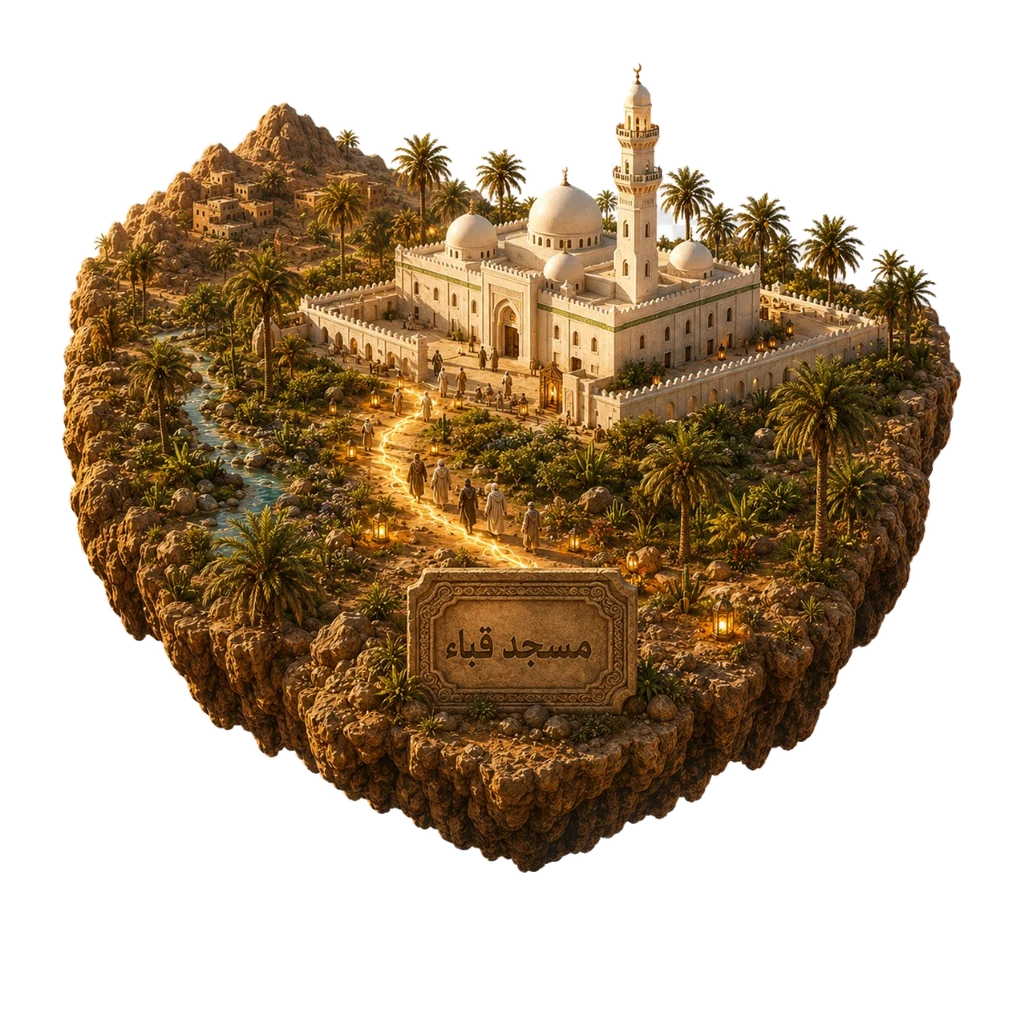
The Messenger of Allah ﷺ arrived at Quba when he came to Madinah, stayed there for a few days, then established the Quba Mosque and prayed in it.

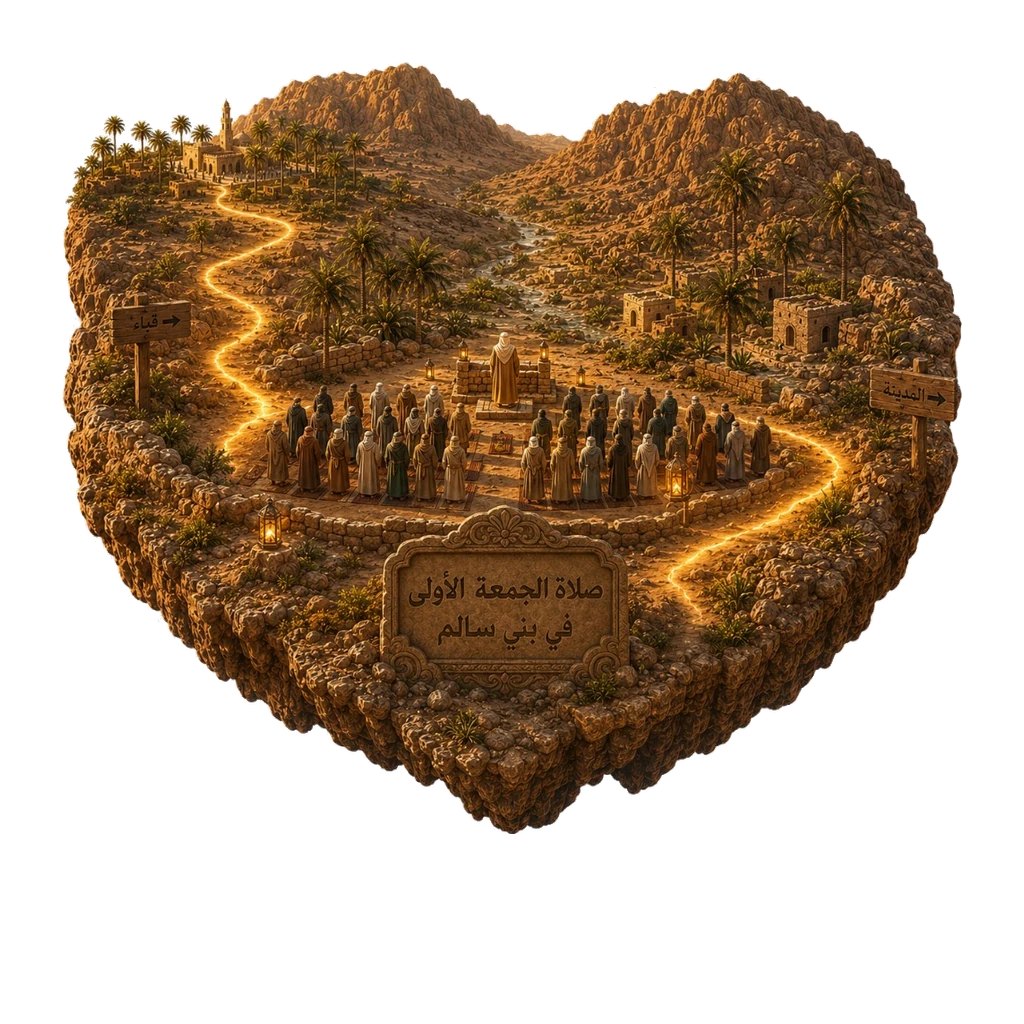
When the Prophet ﷺ set out from Quba to Madinah, Friday came upon him in Banu Salim ibn Awf. He led the people in prayer in the mosque in the valley floor. That was his first Friday prayer and the first sermon he gave in Islam.

When the Messenger of Allah ﷺ arrived in Madinah, he first stayed with Banu an-Najjar, then moved to the house of Abu Ayyub al-Ansari may Allah be pleased with him. That was his first residence in Madinah before the building of the Prophet's Mosque and the living quarters.

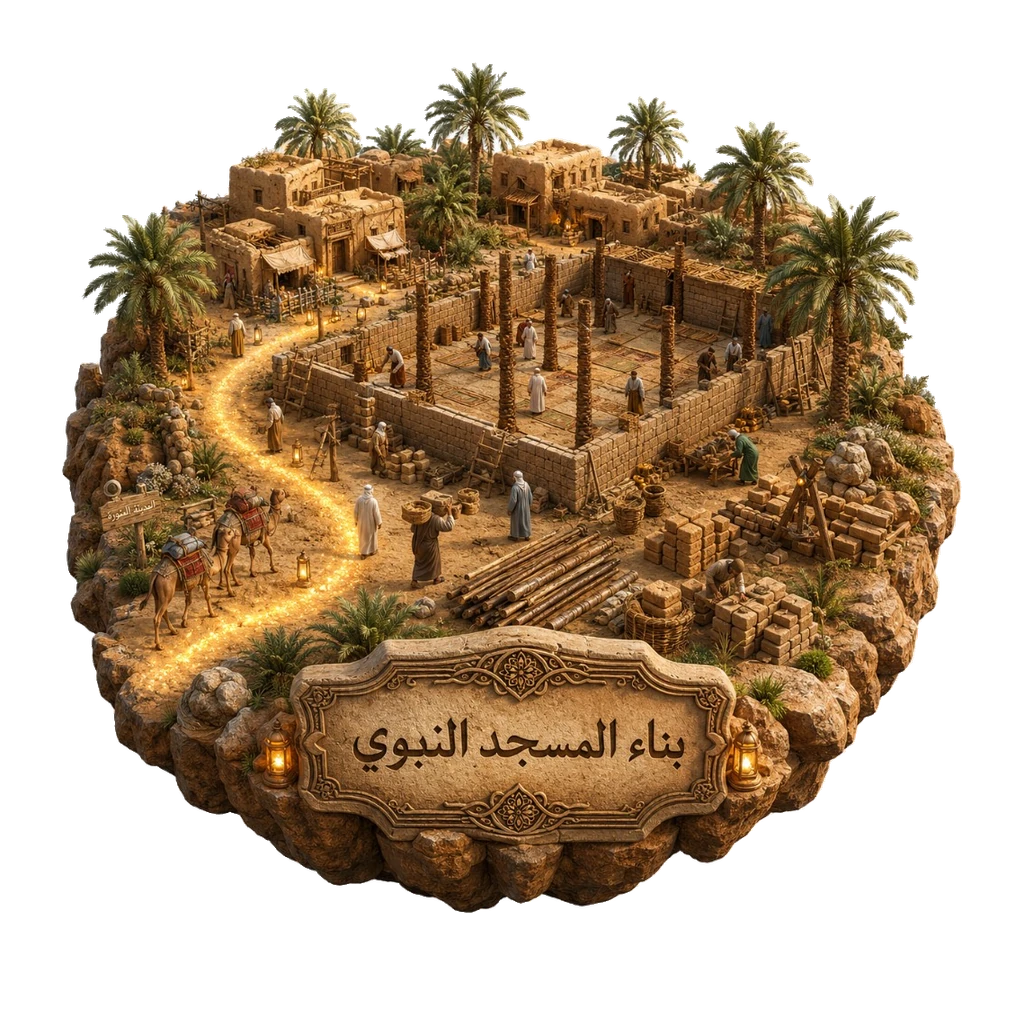
After the Prophet ﷺ arrived in Madinah, his first practical step was to build the Prophet's Mosque at the spot where his camel knelt. Then the living quarters of his ﷺ wives were built beside it. After they were completed, he moved there from the house of Abu Ayyub.

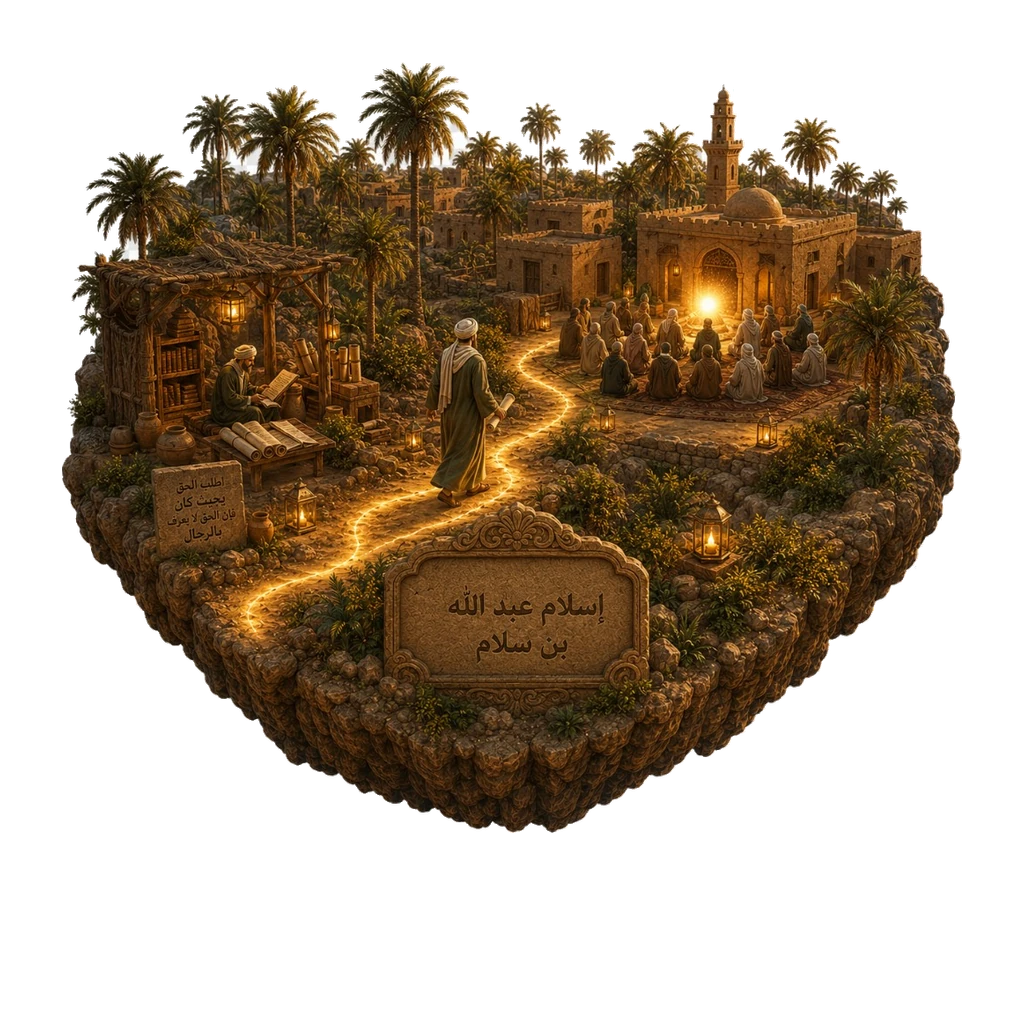
Abdullah ibn Salam, one of the Jewish scholars, entered Islam in Year 1 after the Hijrah (1 AH).

The Prophet ﷺ sent Zayd ibn Harithah and Abu Rafi to Makkah to escort his daughters and his wife Sawdah bint Zam'ah to Madinah. They took them from Makkah to Madinah, and Zaynab was excluded from that.

It shows that Abu Bakr as-Siddiq's family may Allah be pleased with him emigrated in Year 1 after the Hijrah (1 AH).

In Rabi' al-Akhir of the first year after the Hijrah, the resident prayer was increased by two rak'ahs, after both resident and travel prayer had been two rak'ahs.

Abdullah ibn az-Zubayr may Allah be pleased with them both was born in Year 1 after the Hijrah (1 AH), and he was the first child born to the emigrants in Islam.

An-Nu'man ibn Bashir may Allah be pleased with them both was born in the first year after the Hijrah, and he was the first child born to the Ansar after the Hijrah.

It mentions the death of two noble Companions, Kulthum ibn al-Hidm and As'ad ibn Zurarah may Allah be pleased with them both, in Year 1 after the Hijrah.

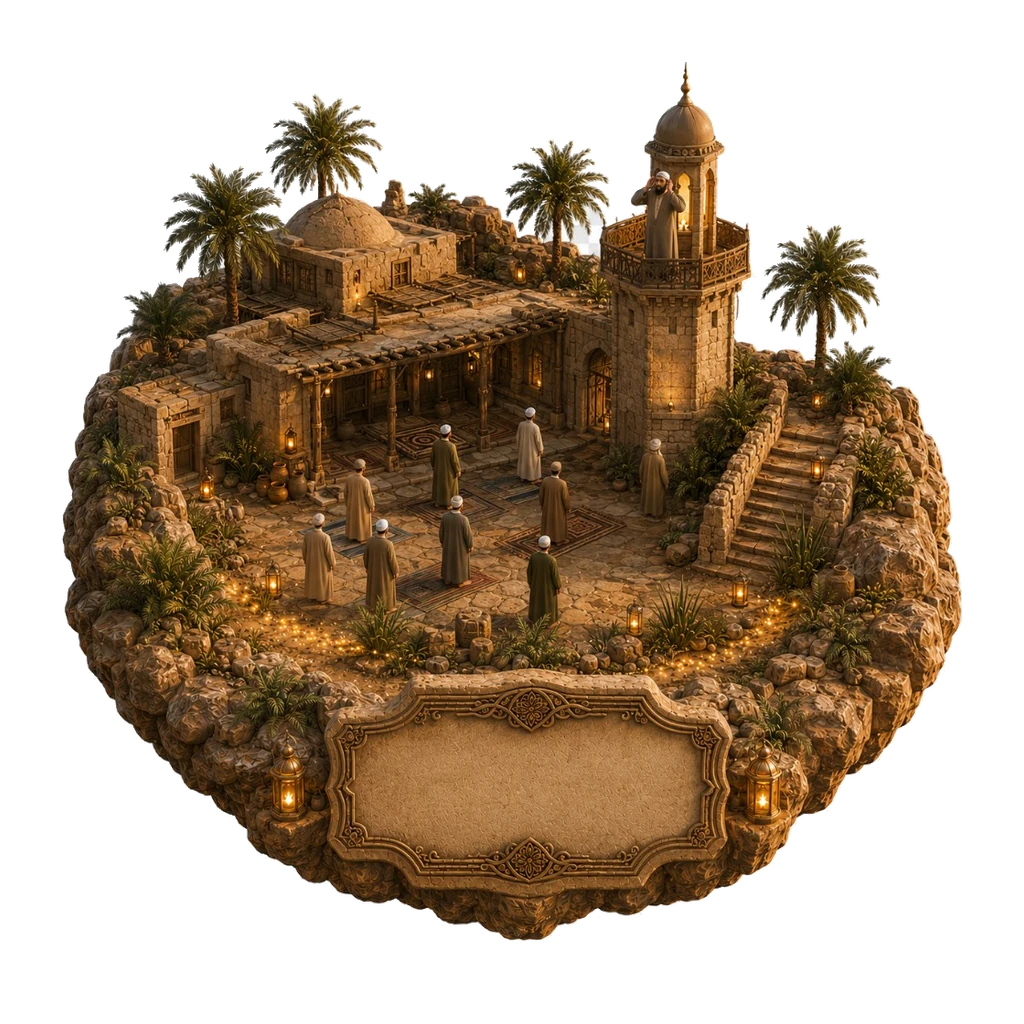
In the early days of the Hijrah, the adhan was instituted as a call to prayer that proclaims monotheism and gathers the Muslims for worship.

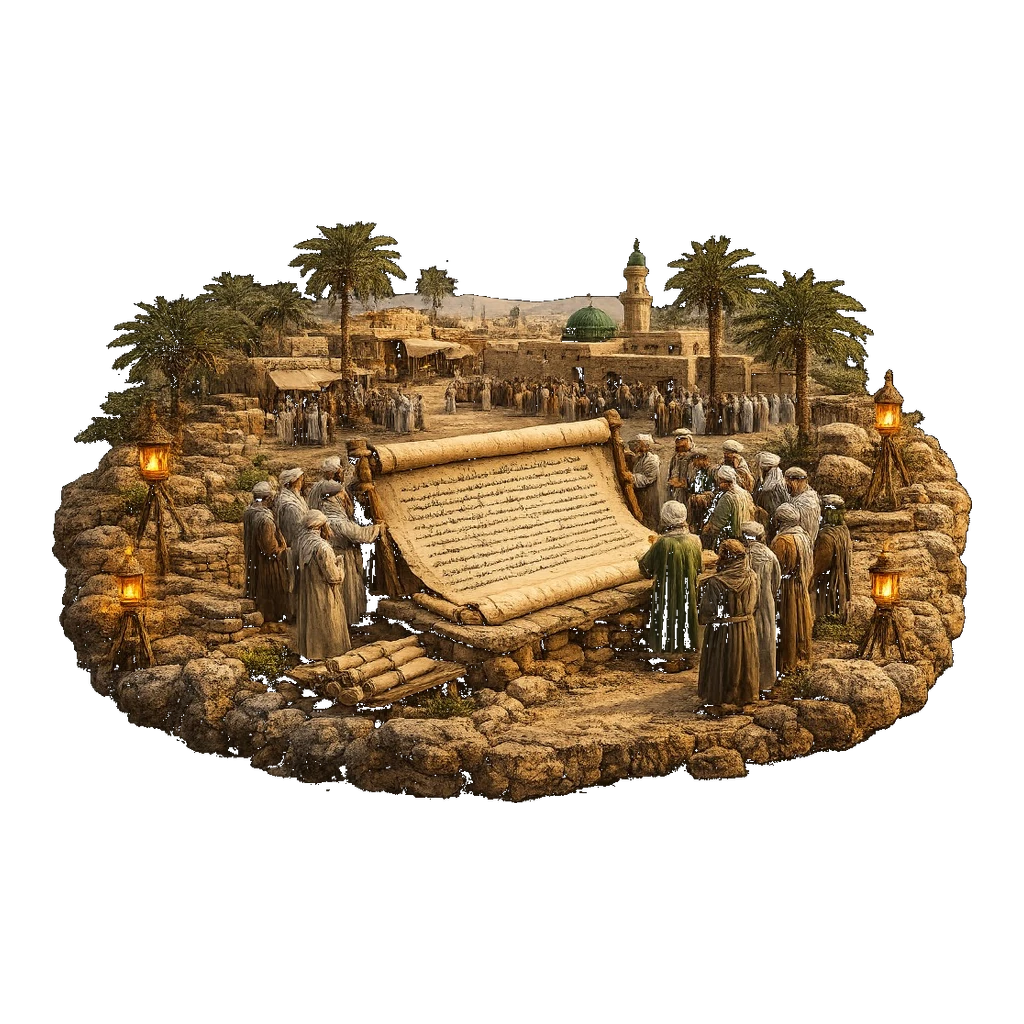
The Charter (Sahifah) of Madinah addressed the relationship between Muslims, the Jews, and the other components of society in Madinah, and it established the principle of covenant and treaty, while preserving security and rights during the stage of building the civil society after the Hijrah.

In Ramadan of Year 1 after the Hijrah, the Messenger of Allah ﷺ sent Hamzah ibn Abd al-Muttalib may Allah be pleased with him on an expedition to Sif al-Bahr. It was made up of thirty men from the emigrants, sent to intercept a Quraysh caravan coming from ash-Sham. They met Quraysh and lined up for battle, then Majdi ibn Amr al-Jinni stepped in between them, and they did not fight.

In Shawwal of the first year after the Hijrah, the Messenger of Allah ﷺ sent Ubaydah ibn al-Harith ibn al-Muttalib with sixty men from the Muhajirun to Batn Rabigh. He met Abu Sufyan with two hundred men, and the two sides exchanged arrows without fighting.

In Shawwal of Year 1 after the Hijrah (1 AH), the Prophet ﷺ consummated his marriage with Mother of the Believers Aishah may Allah be pleased with her. This matches the report that the consummation took place in Madinah in Shawwal of Year 1 after the Hijrah (1 AH).

Sa'd ibn Abi Waqqas may Allah be pleased with him went on an expedition with twenty men to intercept a Quraysh caravan. He was ordered not to go beyond al-Kharrar, and when they reached it on the morning of the 5th, they found the caravan had passed the day before.

The event text states that the Prophet ﷺ established brotherhood between the Muhajirun and the Ansar in Dhu al-Qa'dah of Year 1 after the Hijrah (1 AH).