 المساعد الذكي
جارٍ تحميل القصة…

ز
مرحبًا زائرExpedition of Sa'd ibn Abi Waqqas may Allah be pleased with him to al-Kharrar in Dhu al-Qa'dah of Year 1 after the Hijrah (1 AH)
Sa'd ibn Abi Waqqas may Allah be pleased with him went on an expedition with twenty men to intercept a Quraysh caravan. He was ordered not to go beyond al-Kharrar, and when they reached it on the morning of the 5th, they found the caravan had passed the day before.
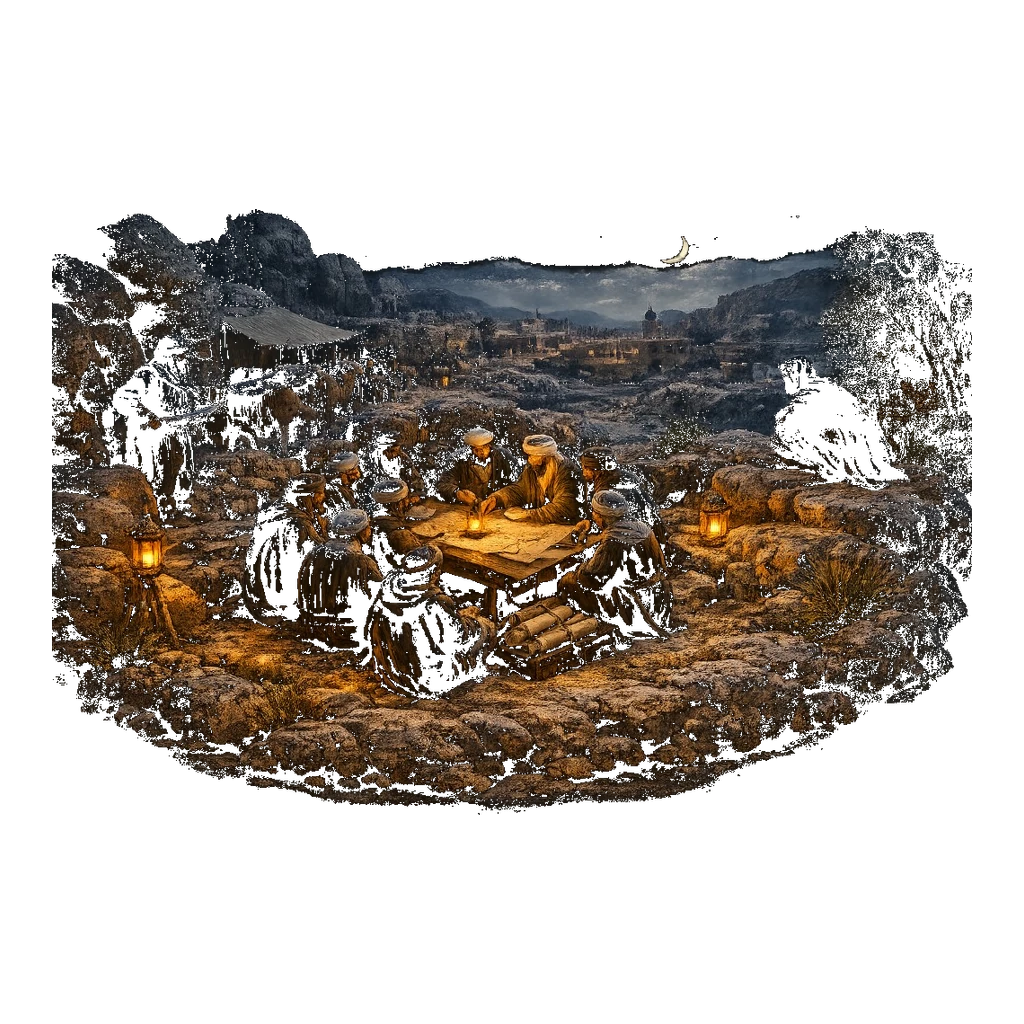
Sa'd ibn Abi Waqqas may Allah be pleased with him went on an expedition with twenty men to intercept a Quraysh caravan. He was ordered not to go beyond al-Kharrar, and when they reached it on the morning of the 5th, they found the caravan had passed the day before.
It falls within the expeditions of Year 1 after the Hijrah (1 AH), which were part of organizing the confrontation with Quraysh.
In Dhu al-Qa'dah of this year: there was the expedition of Sa'd ibn Abi Waqqas may Allah be pleased with him to al-Kharrar.
This means that the Prophet ﷺ sent Sa'd may Allah be pleased with him with a small group to watch a Quraysh caravan, but the caravan had already passed them, so no fighting took place and no caravan was taken.
The Muslims in Madinah were facing Quraysh, and expeditions would go out to intercept some of its caravans.
Facing Quraysh and monitoring its trade movements within the ongoing conflict.
There was no direct change on the ground, since the expedition returned without fighting.
One of the expeditions of Year 1 after the Hijrah (1 AH).
It shows the organized nature of Islamic work under Prophetic leadership.
It reflects monitoring Quraysh's movements during the stage of state-building in Madinah.
It shows the cohesion of the Muslim group and its obedience.
It teaches discipline and following instructions.
It contributes to building an orderly system for military movement.
It is part of the strategy of sending expeditions to track Quraysh.
Commander of the expedition
Ordered the expedition and defined its mission
The action was carried out by command of the Prophetic leadership and within obedience.
Staying within the limits and not going beyond the assigned task.
The group moves as an organized entity.
There is aware management of the conflict with Quraysh.
The caravan was a target because it represented Quraysh trade.
Teaching the Companions to be patient when the intended goal is missed if it is not achieved.
The existence of an expedition with a defined number, objective, and geographic boundary.
Military work became an orderly system.
Teamwork that requires sticking to the plan and not going beyond it.
Success is not only reaching the goal, but also following the instructions.
The importance of defining the mission and boundaries clearly.
The need for institutional discipline in field missions.
Learning obedience and patience when what one wants is not achieved.
It is not correct to apply the details of old battles to the modern world in a literal way.
The Prophetic context was in building the first state and under conditions of direct conflict.
Define the mission precisely and stick to its limits, even if the expected result is missed.

