 المساعد الذكي
جارٍ تحميل القصة…

ز
مرحبًا زائرThe Expedition of as-Sawiq in Dhu al-Hijjah of Year 2 after the Hijrah (2 AH)
Abu Sufyan set out with 200 riders, halted at the head of Qanat, then raided a part of Madinah, burned and cut down some date palms, and killed two men. He then fled back to Makkah. The Messenger of Allah ﷺ pursued him to Qarqarat al-Kudr. The men threw away a lot of sawiq from their provisions to lighten their load, and the Muslims took it. The event was called The Expedition of as-Sawiq.
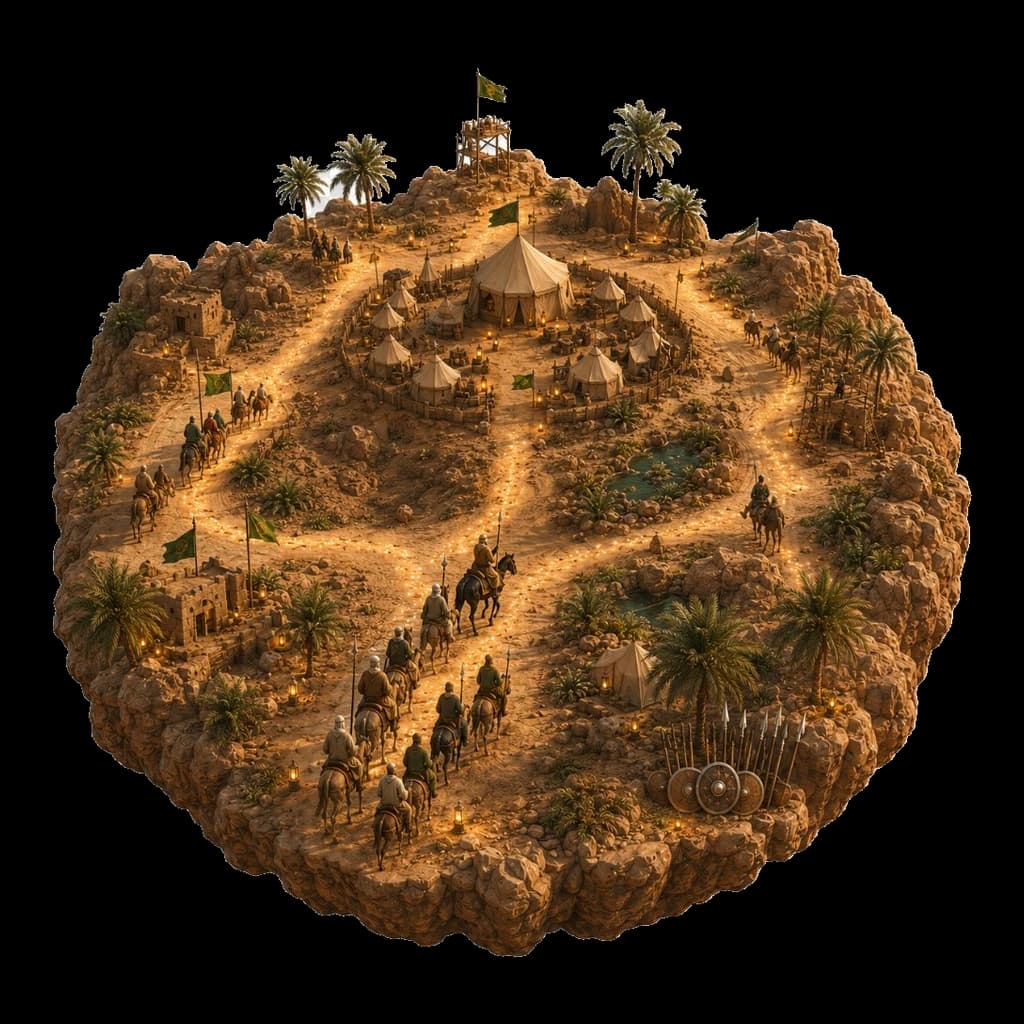
Abu Sufyan set out with 200 riders, halted at the head of Qanat, then raided a part of Madinah, burned and cut down some date palms, and killed two men. He then fled back to Makkah. The Messenger of Allah ﷺ pursued him to Qarqarat al-Kudr. The men threw away a lot of sawiq from their provisions to lighten their load, and the Muslims took it. The event was called The Expedition of as-Sawiq.
One episode in the conflict after Badr, and part of the military activity between Badr and Uhud.
In Dhu al-Hijjah of this year: The Expedition of as-Sawiq took place.
Abu Sufyan wanted to show his people a quick sign of strength after Quraysh had become weak, so he left with a small group and then attacked the outskirts of Madinah at night and caused damage there. When the Prophet ﷺ learned of the news, he went out in pursuit, but Abu Sufyan and his men fled quickly and left behind their food, which was sawiq. The Muslims took it, and that is where the name came from.
It came after Badr and the confusion that followed for Quraysh, along with their desire to show strength and take revenge, in the context of repeated attempts to harm the Muslims.
Quraysh’s desire to preserve its standing and show strength after the impact of Badr and the concern and unrest that followed.
Quraysh was convinced that a quick raid did not give it any real advantage, while the Muslims showed the value of rapid pursuit and keeping security around Madinah.
An event from the actions after Badr in the Year 2 after the Hijrah.
It shows the continued call to Islam while protecting the Muslim community from attack.
It confirms that Madinah had become an entity that was defended and guarded.
It protected the safety of the people and the crops on the outskirts of Madinah.
It teaches quick response to aggression and good organization of guard duty.
It shows the emergence of an security and military administration for Madinah.
It shows pursuing the aggressor and not letting him strike and then withdraw without a response.
Leader of the raiders on the outskirts of Madinah
Went in pursuit of the raiders after the news reached him
Put in charge of Madinah during this ghazwah
Victory and protection are in Allah's hands, while taking the means.
Not leaving aggression without a response, while keeping movement disciplined and avoiding rashness.
Protecting the community and its property from mischief.
Showing that the Muslims had the ability to deter and pursue.
Damage to the date palms and crops threatened Madinah's livelihood, so protecting them was important.
Training Muslims to stay alert and disciplined.
Having someone in charge of Madinah when the army left.
Building an organized society that protects its borders and facilities.
Sudden attacks on security or property, followed by attempts to flee.
A quick response, protecting facilities, and not letting the aggressor achieve his aim without follow-up.
The importance of dividing responsibilities during crises and securing the home front when moving outward.
The need for security readiness and protection of vital areas.
Staying alert and not underestimating small attacks.
The event cannot be applied to every modern situation without considering differences in Islamic law and circumstances.
The Prophetic context was the building of an emerging state facing direct aggression, while the modern context has different systems and tools.
If a limited attack occurs, it should not be underestimated; rather, it should be monitored and met in a way that preserves security.

