 المساعد الذكي
جارٍ تحميل القصة…

ز
مرحبًا زائرThe Expedition of Buwat in Rabi' al-Awwal of Year 2 after the Hijrah (2 AH)
The Messenger of Allah ﷺ went out in Rabi' al-Awwal of Year 2 after the Hijrah (2 AH) on the Expedition of Buwat, with 200 of his Companions, to intercept a caravan of Quraysh that included Umayyah ibn Khalaf al-Jumahi and 100 men from Quraysh, and 2,500 camels. He reached Buwat from the side of Radwa and met no opposition.
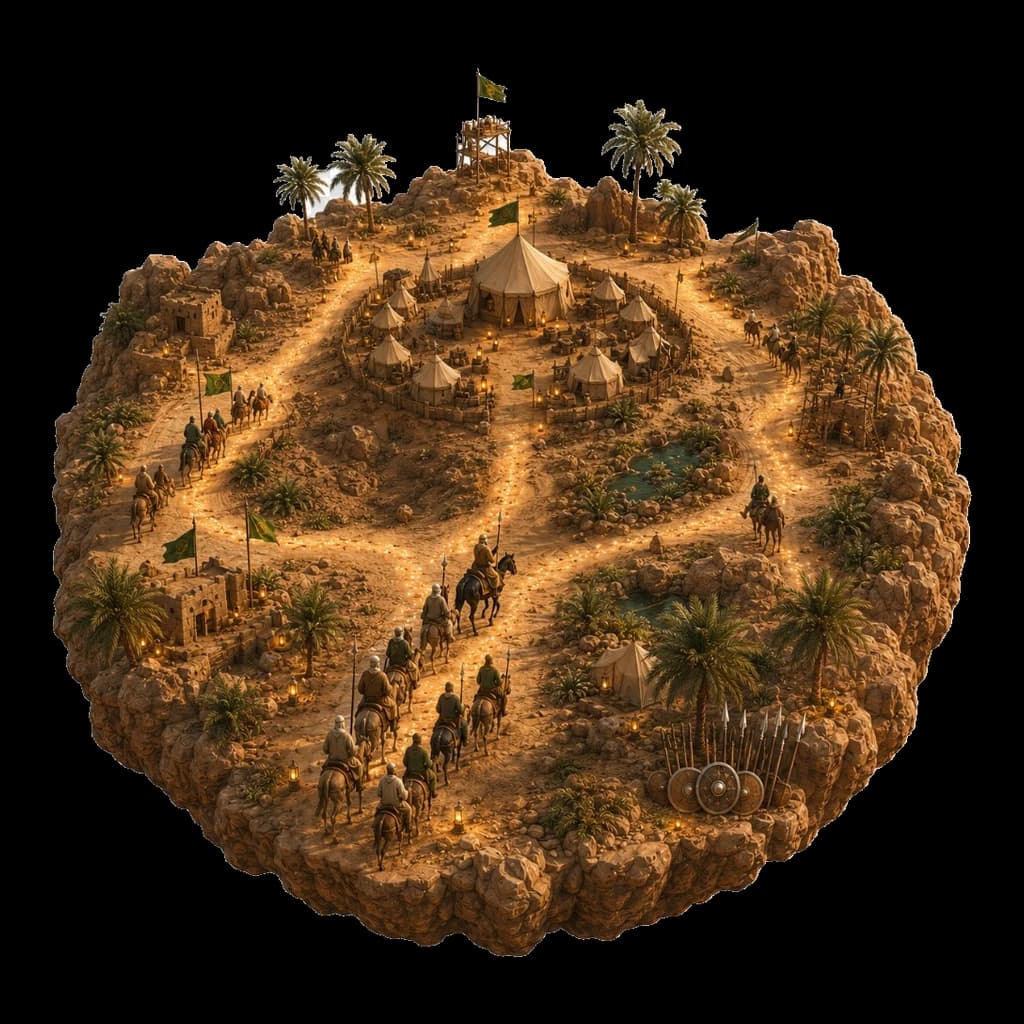
The Messenger of Allah ﷺ went out in Rabi' al-Awwal of Year 2 after the Hijrah (2 AH) on the Expedition of Buwat, with 200 of his Companions, to intercept a caravan of Quraysh that included Umayyah ibn Khalaf al-Jumahi and 100 men from Quraysh, and 2,500 camels. He reached Buwat from the side of Radwa and met no opposition.
This was one of the early ghazwahs in Year 2 after the Hijrah (2 AH), part of building Islamic strength in Madinah.
And in Rabi' al-Awwal of this year: the Messenger of Allah ﷺ went on the Expedition of Buwat.
The aim of the outing was to intercept a caravan of Quraysh, but the army did not fight. It reached Buwat and then returned.
This was part of the military activity in the early Madinan period, in the context of confronting Quraysh and protecting the Muslims.
Pressure on Quraysh and continuing the conflict with them in the early Madinan period.
The Muslims' military activity in Madinah continued, with their presence against Quraysh being strengthened.
One of the early ghazwahs in Year 2 after the Hijrah (2 AH).
It shows the continued call to Islam in Madinah with protection for the Muslim community.
It reflects the presence of the emerging state in facing Quraysh.
It shows the cohesion of the Muslim community, with someone appointed to manage Madinah's affairs.
It teaches discipline, obedience, and taking responsibility.
It is part of building an organized Islamic entity.
It represents part of the pressure on Quraysh's trade routes.
Leader of the ghazwah
He was in the caravan that was to be intercepted
Bearer of the banner
The Prophet ﷺ appointed him as his deputy in Madinah
Trust in the leadership of the Prophet ﷺ in movement and jihad.
Commitment to order and avoiding chaos when leaving and returning.
Distributing responsibilities between those who went out and those who remained in Madinah.
Showing that Muslims are able to move in an organized way.
The event is tied to Quraysh's trade route.
Training the Companions to take part in collective tasks.
Having someone govern Madinah during the ghazwah.
Building a society capable of combining worship, organization, and defense.
The need to protect society and manage resources amid challenges.
The importance of planning and assigning roles in collective action.
The need for clear leadership and administrative delegation in the leader's absence.
Organizing responsibilities and not leaving an administrative vacuum.
Discipline and commitment to the task assigned to him.
The modern event should not be measured against the details of the ghazwah in rulings and circumstances.
The Prophetic context was one of building an emerging state and direct conflict with Quraysh.
In any collective action, leadership and who handles internal affairs must be clearly defined.

