 المساعد الذكي
جارٍ تحميل القصة…

ز
مرحبًا زائرThe Messenger of Allah ﷺ set out in Safar of Year 2 after the Hijrah (2 AH) to al-Abwa until he reached Waddan
The Messenger of Allah ﷺ set out in Safar, in year 2 AH, with seventy men from the Muhajirun only to intercept a Quraysh caravan until he reached Waddan, and he met no resistance. He left Madinah in charge of Sa'd ibn Ubadah, may Allah be pleased with him, and in this ghazwah he concluded a treaty of alliance with Amr ibn Makhshi ad-Damri, the chief of Banu Damrah.
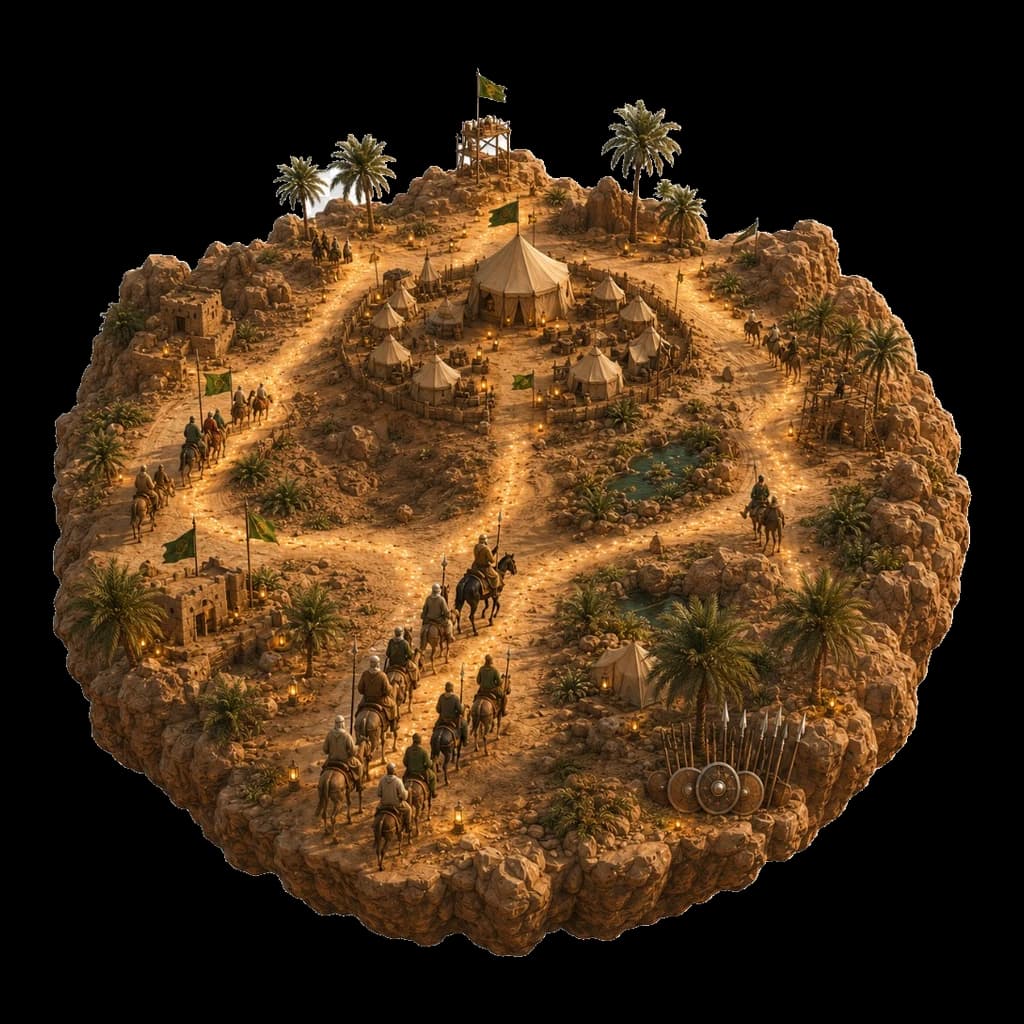
The Messenger of Allah ﷺ set out in Safar, in year 2 AH, with seventy men from the Muhajirun only to intercept a Quraysh caravan until he reached Waddan, and he met no resistance. He left Madinah in charge of Sa'd ibn Ubadah, may Allah be pleased with him, and in this ghazwah he concluded a treaty of alliance with Amr ibn Makhshi ad-Damri, the chief of Banu Damrah.
It marks the beginning of the Prophet’s direct ghazwahs in Madinah, within the stage of building strength and organizing relations with the tribes.
In Safar of this year: the Messenger of Allah ﷺ set out on the Expedition of al-Abwa (Waddan) until he reached Waddan. It was the first expedition he led himself, may my father and mother be ransomed for him.
This was the first time the Prophet ﷺ set out himself in the Expedition of al-Abwa (Waddan). He left with his Companions to intercept a Quraysh caravan, but there was no fighting. He reached Waddan, then returned to Madinah after making an alliance with Banu Damrah.
This ghazwah came as part of the military activity between Badr and Uhud, and within the Muslims' movements to intercept Quraysh caravans and secure Madinah.
To confront Quraysh's economic and military moves, show the Muslims' strength, secure Madinah, and make treaties with nearby tribes.
The Muslims returned without fighting, with a new alliance added with Banu Damrah, and the first ghazwah in which the Prophet ﷺ himself went out.
The first ghazwah led by the Messenger of Allah ﷺ himself.
Showing the presence of the Prophetic state in its surroundings while calling to peace and keeping covenants.
Forming an alliance with Banu Damrah and appointing someone to run Madinah.
Organizing relations with nearby tribes and securing Madinah.
Teaching the Companions the meaning of direct leadership, discipline, and obedience.
Establishing the principle of treaty instead of mere confrontation.
Securing the roads, monitoring Quraysh movements, and building alliances.
Leader of the ghazwah and the one who went out himself
The Prophet appointed him over Madinah
The Prophet concluded an alliance treaty with him
Standard-bearer
Trusting Allah while taking the means.
Keeping the covenant and not going beyond where no fighting took place.
Building peaceful relations with the tribes.
Managing Madinah during the leader's absence through delegation.
Moving to intercept a Quraysh caravan linked to trade.
Training the Companions in organized expedition and obedience.
Having delegation and administration of Madinah during the absence.
Showing that power in Islam is governed by covenants.
The tension between security and relations with the surrounding area.
Combining firmness in protecting interests with building lawful alliances.
The importance of planning, sharing responsibilities, and forming disciplined partnerships.
Managing security and foreign relations without chaos.
Discipline, obedience, and good judgment about what serves the common good.
The event should not be directly mapped in detail onto modern events outside its context.
The Prophetic context was one of founding a state and revelation, while the modern context is governed by different systems and laws.
When there is a threat or a public interest, combine preparedness with lawful alliance.

