 المساعد الذكي
جارٍ تحميل القصة…

ز
مرحبًا زائرThe Prophet ﷺ arbitrates between Quraysh when they disagreed over who should place the Black Stone in its position during the rebuilding of the Kabah
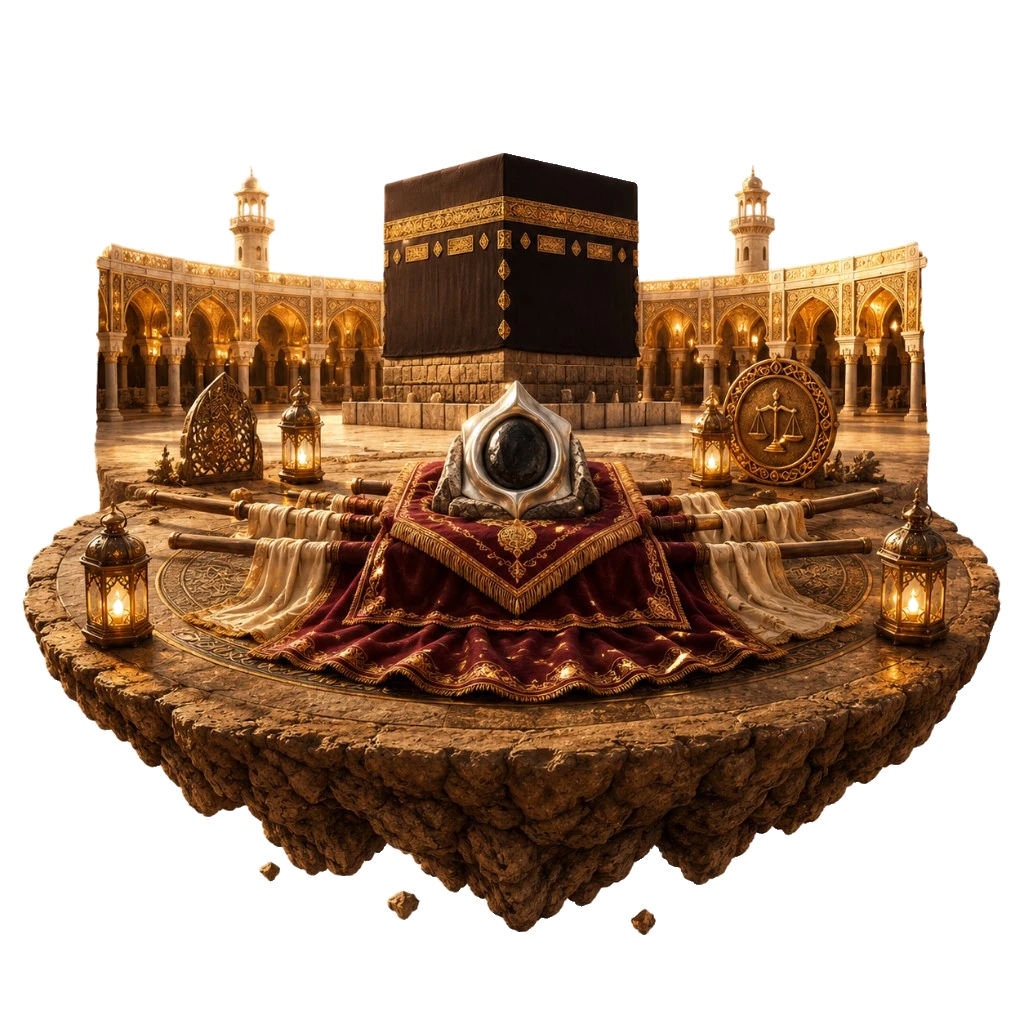
When the Prophet ﷺ reached the age of thirty-five, Quraysh disagreed over who should have the honor of placing the Black Stone in its position during the rebuilding of the Kabah. They referred the matter to him, and he judged between them with a solution that pleased everyone.
حكمة أوقفت حربًا بين بطون قريش قبل البعثة بسنوات.
When the Prophet ﷺ reached the age of thirty-five, Quraysh disagreed over who should have the honor of placing the Black Stone in its position during the rebuilding of the Kabah. They referred the matter to him, and he judged between them with a solution that pleased everyone.
It was one of the events before the Prophetic Mission that showed the Prophet's ﷺ wisdom and trustworthiness, and prepared his people to know his virtue.
When he ﷺ reached the age of thirty-five, Quraysh disagreed over who should place the Black Stone in its position, so he arbitrated between them.
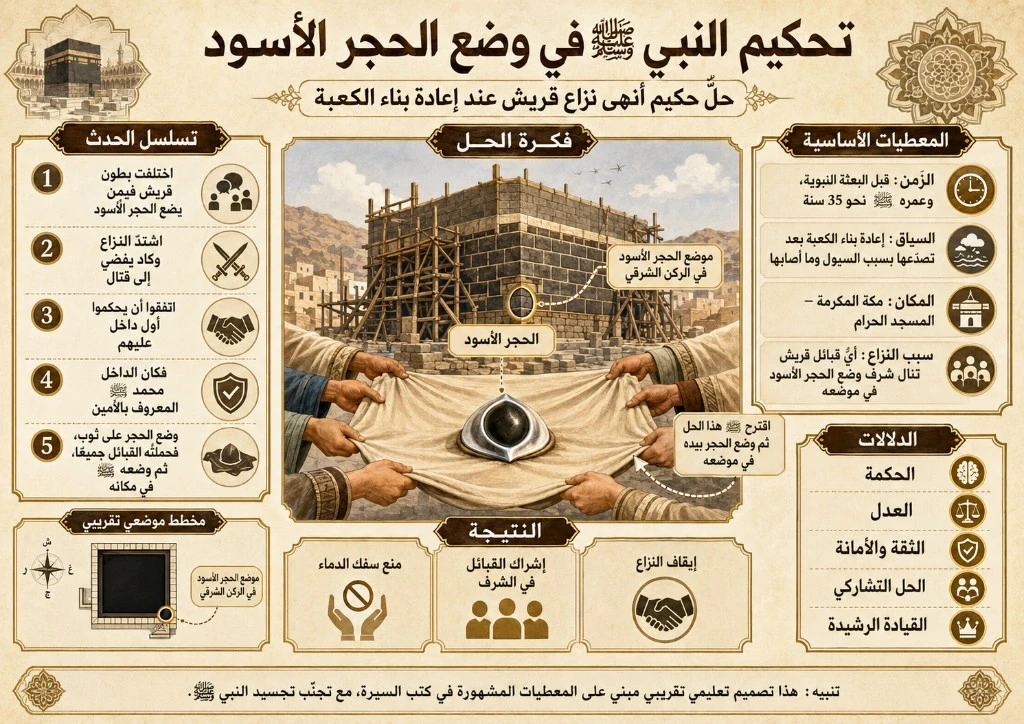
Quraysh was rebuilding the Kabah. When they reached the place of the Black Stone, they argued: who would put it in its place? The dispute nearly grew worse, so they agreed to let the first man who entered through the gate of the mosque judge between them. It was the Messenger of Allah ﷺ. They accepted his judgment, and he placed the Stone in a way that satisfied all the tribes.
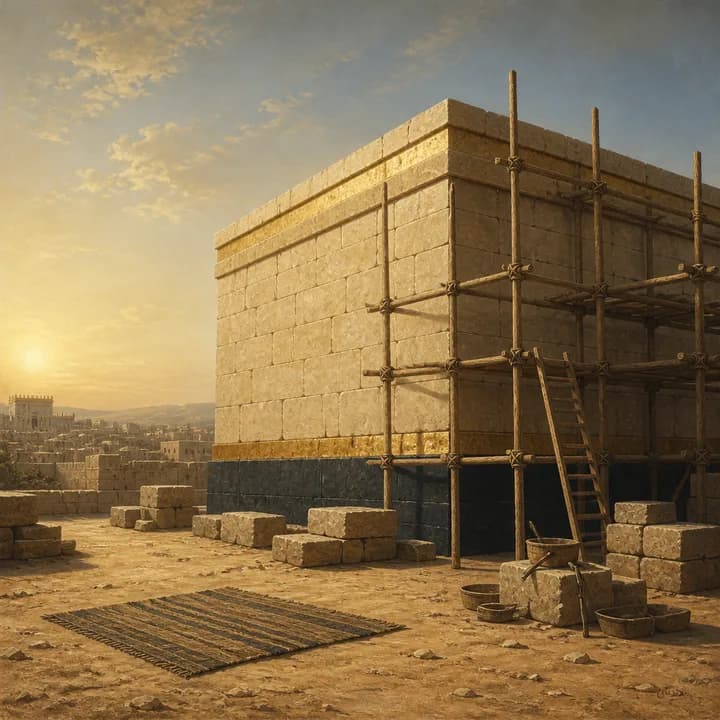
The rebuilding of the Kabah had begun after a great flood swept through Makkah, and they agreed to rebuild it. Then, when they reached the place of the Black Stone, disagreement broke out among them.
Each tribe was eager for the honor of taking part in this great matter, and there was rivalry among the tribes over status.
The disagreement that had nearly turned into war came to an end, and the Prophet's ﷺ position of acceptance and approval among Quraysh was firmly established in this situation.
It is one of the most famous moments before the mission, and it shows the Prophet’s ﷺ wisdom before prophethood.
It proved to people his trustworthiness and wisdom, and that was one of the reasons they later accepted his message.
It prevented a major tribal dispute that could have led to a clash.
It united the tribes around one solution and put out a discord that was about to flare up.
It teaches wisdom in managing disagreement and seeking a solution that satisfies all sides.
It highlights the value of fair arbitration instead of violence.
It strengthened the Prophet’s ﷺ standing among Quraysh before the mission and prepared the way for acceptance of his words.
He judged between Quraysh and placed the Black Stone in its place
It disagreed over who would place the Black Stone, then accepted the Prophet's ﷺ judgment
He suggested that they let the first person to enter through the mosque gate judge between them
Allah prepares acceptance and wisdom for His Prophet ﷺ before the mission.
Trustworthiness, justice, and wisdom in handling conflict.
It is possible to bring disputing sides together around a shared solution when trust exists.
Wise arbitration prevents strife and protects lives.
Teaching good conflict management and the search for the common good.
The importance of having an agreed arbitration process in times of dispute.
Giving peaceful solutions priority over conflict.
Disputes over symbols, positions, or shared rights between different parties.
Adopting fair arbitration and inclusive solutions instead of escalation.
Building trusted mechanisms to resolve internal disputes.
Giving priority to mediation and fair judgment before disagreement grows worse.
Humility and seeking solutions that preserve the unity of the group.
This event should not be applied to every dispute in every way. Rather, its principle of wisdom and arbitration should be taken from it.
The dispute was tribal and centered on the honor of a religious place, while today disputes may be institutional, political, or social.
If a dispute grows intense, seek a trusted judge accepted by the parties before the disagreement turns into a clash.

