 المساعد الذكي
جارٍ تحميل القصة…

ز
مرحبًا زائرThe Battle of the Confederates (al-Ahzab) took place in Shawwal of Year 5 after the Hijrah
The Battle of the Confederates (al-Ahzab) took place in Shawwal of Year 5 after the Hijrah (5 AH), and ended with the Confederates driven back in defeat.

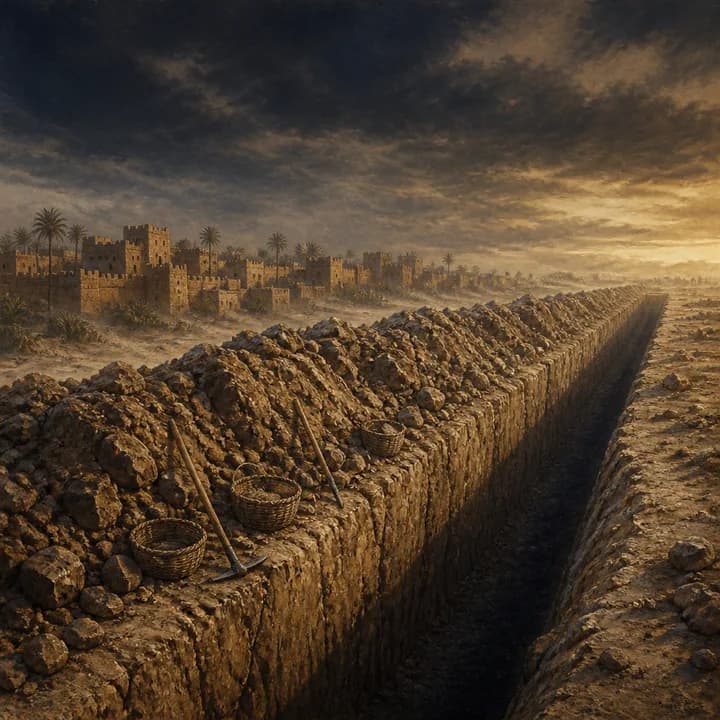
الحفر، والحرب النفسية، وتفكيك التحالفات في أخطر حصار للمدينة.
The Battle of the Confederates (al-Ahzab) took place in Shawwal of Year 5 after the Hijrah (5 AH), and ended with the Confederates driven back in defeat.
It represents an important turning point in the conflict with the forces hostile to Madinah.
And in Shawwal of this year: The Battle of the Confederates (al-Ahzab) took place, and Allah repelled them in disgrace.
A number of the Confederates gathered to besiege Madinah. The Muslims were tested by the siege and hardship. Then Allah, the Most High, turned them away, and they left defeated.
The Muslims had faced the gathering of the Confederates around Madinah, and the siege took place in Shawwal of Year 5 after the Hijrah (5 AH).
The hostility of the different powers to Islam and their attempt to wipe out the Muslims or weaken them.
The siege ended, and the Confederates failed to achieve their goal.
One of the major siege events in the Sirah.
It showed the steadfastness of the call to Islam despite the gathering of opponents.
It proved that hostile alliances were unable to overthrow Madinah.
It strengthened the cohesion of the Muslim community under hardship.
It teaches patience and trust in Allah's victory.
It highlighted the Muslims' shift from a weak defensive position to effective resilience.
It foiled a major attempt to wipe out the Muslims.
Leader of the Muslims in facing the Confederates
The force that besieged Madinah
Victory is from Allah.
Steadfastness in hardship.
Unity of ranks in the face of danger.
The failure of hostile alliances before the emerging state.
Teaching patience and certainty.
The importance of organization in facing crises.
Building collective resilience against threats.
Conflicting groups or collective pressure on communities.
Steadfastness, taking the means, and not giving up hope.
The importance of planning and standing firm in crises.
Strengthening internal unity in the face of challenges.
Relying on Allah while remaining steadfast.
It is limited to the general lesson, without uncontrolled application.
The prophetic context was revelation and Prophetic leadership in a specific historical setting.
When pressures gather, unity, steadfastness, and planning are the cause of safety.

