 المساعد الذكي
جارٍ تحميل القصة…

ز
مرحبًا زائرThe Messenger of Allah ﷺ sent the expedition of Abdullah ibn Jahsh may Allah be pleased with him to Nakhlah in Rajab of Year 2 after the Hijrah (2 AH)
The Prophet ﷺ sent an expedition led by Abdullah ibn Jahsh may Allah be pleased with him to Nakhlah in Rajab of Year 2 after the Hijrah (2 AH).
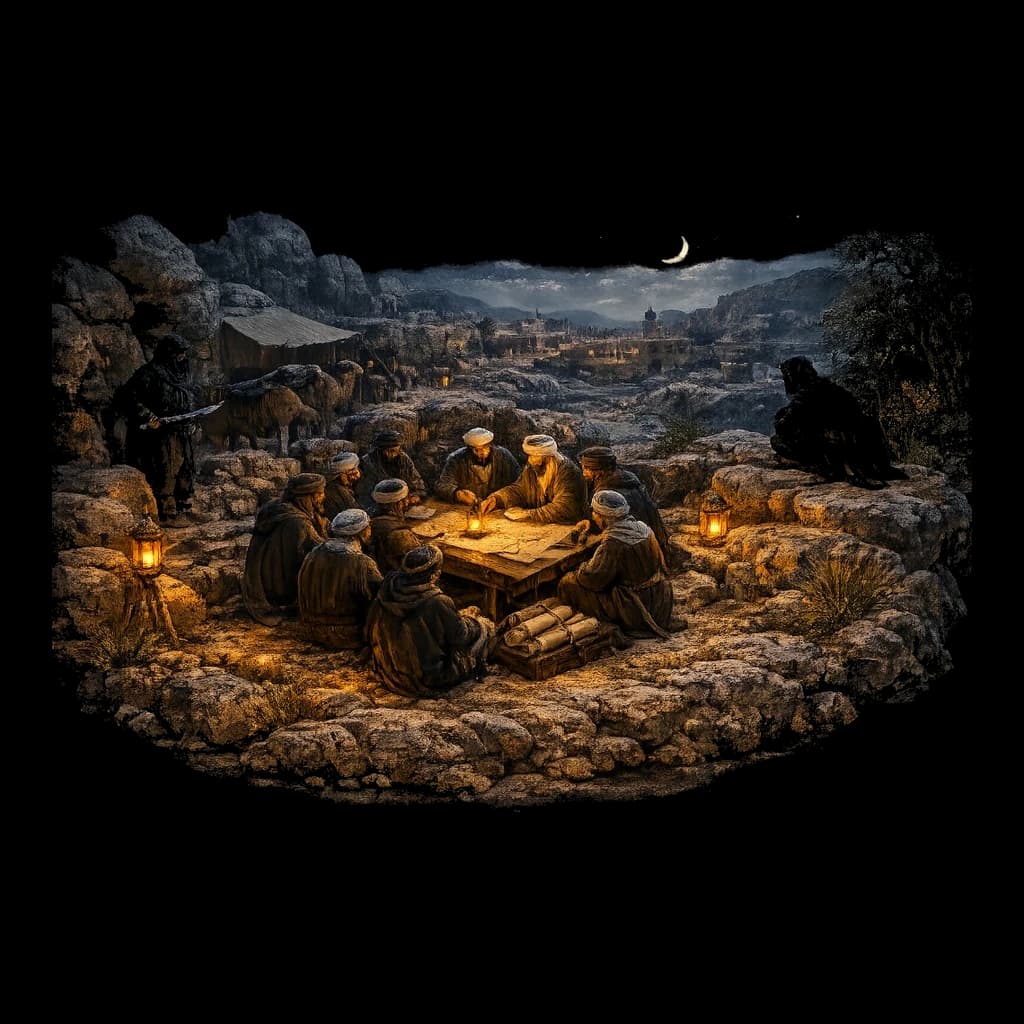
The Prophet ﷺ sent an expedition led by Abdullah ibn Jahsh may Allah be pleased with him to Nakhlah in Rajab of Year 2 after the Hijrah (2 AH).
This falls within the events of Year 2 after the Hijrah related to the military movements of Madinah.
And in Rajab of this year: the Messenger of Allah ﷺ sent the expedition of Abdullah ibn Jahsh may Allah be pleased with him to Nakhlah.
It means that the Prophet ﷺ sent a group of the Companions on a special mission to a place called Nakhlah, and their leader was Abdullah ibn Jahsh may Allah be pleased with him.
The Messenger of Allah ﷺ regained consciousness and his heart was reassured because of this unseen victory that Allah had granted him from above the seven heavens. Then he continued on the road to Makkah until he reached Wadi Nakhlah, where he stayed for several days. In Wadi Nakhlah there were two places suitable for staying, al-Sayl al-Kabir and al-Zaymah, because they had water and fertile land. We could not find a source that identifies the place where he ﷺ stayed.
It is one of the events of Year 2 after the Hijrah (2 AH).
It shows the meaning of obedience and organized execution of orders.
It indicates the presence of organized secret movements in Madinah.
The one who sent the expedition
Commander of the expedition
Trust in the guidance of the Prophet ﷺ.
Discipline and obedience.
Training the Companions to take responsibility in special tasks.
The presence of clear leadership organization for tasks.
The need to assign small teams to specific, clear tasks.
Clear leadership and defining the task before moving.
The importance of dividing roles and appointing a leader for the task.
Organized work in field tasks.
Fulfilling the assigned duty and not تجاوزing the set role.
It is limited to the general organizational meaning, without unconfirmed projections.
The Prophetic context was within revelation and direct Prophetic leadership.
Every task needs a clear leader, a defined scope, and disciplined responsibility.

