 المساعد الذكي
جارٍ تحميل القصة…

ز
مرحبًا زائرThe Expedition of Dhat al-Ushayrah in Jumada al-Ula of Year 2 after the Hijrah, in which the Prophet ﷺ made a treaty with Banu Mudlij and their allies among Banu Damrah
The Messenger of Allah ﷺ went in Jumada al-Ula of Year 2 after the Hijrah to The Expedition of Dhat al-Ushayrah, then made a treaty with Banu Mudlij and their allies among Banu Damrah.
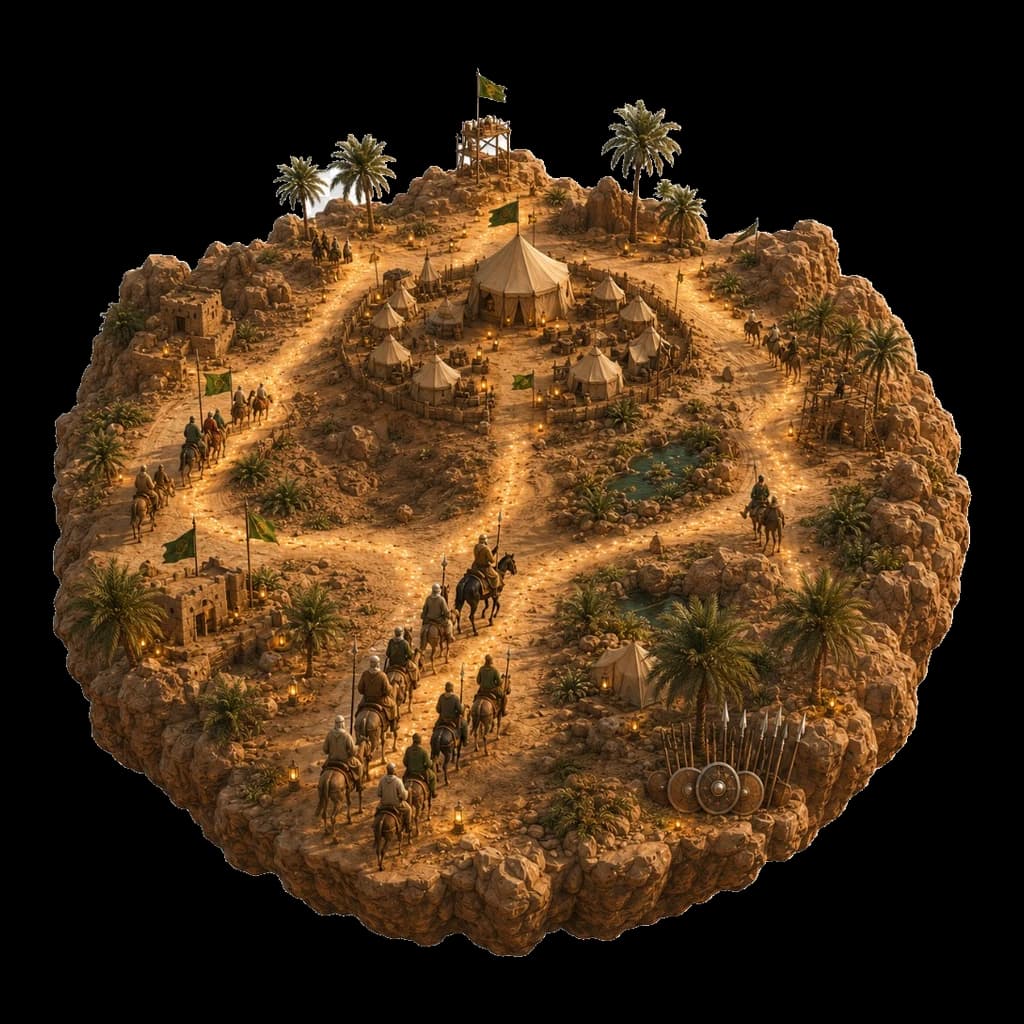
The Messenger of Allah ﷺ went in Jumada al-Ula of Year 2 after the Hijrah to The Expedition of Dhat al-Ushayrah, then made a treaty with Banu Mudlij and their allies among Banu Damrah.
It represents one of the steps in building political and security relations in Year 2 after the Hijrah, before the major Battle of Badr.
And in Jumada al-Ula of this year: the Messenger of Allah ﷺ went on the Expedition of Dhat al-Ushayrah, and he made a treaty with Banu Mudlij and their allies among Banu Damrah.
This means that the Prophet ﷺ went on this expedition, then made a non-aggression treaty with Banu Mudlij and those allied with Banu Damrah.
This ghazwah was part of the Muslims' military activity in Year 2 after the Hijrah, and it came in the context of moving to intercept a Quraysh caravan heading to ash-Sham.
Organizing relations with the neighboring tribes at that stage, within the Muslims' military and political movement in Madinah.
The relationship with Banu Mudlij and Banu Damrah shifted to a state of truce and non-aggression instead of tension or possible military conflict.
One of the events of Year 2 after the Hijrah linked to building ties with tribes.
It showed that the call to Islam is not separate from organizing peace and covenants.
It helped strengthen the presence of the Prophetic state through treaties.
It eased tension with neighboring tribes.
It teaches how to manage relations with others through treaties.
It highlights the value of covenants and commitment in building society.
It secures the route and relations with surrounding tribes.
Leader of the ghazwah and maker of the treaty
Party to the treaty
Allies of Banu Mudlij and party to the treaty
Relying on the guidance of the Prophet ﷺ in peace and war.
Fulfilling covenants and avoiding aggression.
The possibility of turning relations with tribes into peaceful coexistence.
The treaty is one of the tools for managing the area around the state.
Securing roads and relations reduces tension around trade and travel.
Teaching Muslims that strength does not prevent making peace.
Highlighting the role of the state in making covenants.
Establishing the principle of organized peace instead of tribal chaos.
Tension between groups, tribes, or neighboring parties.
Managing disagreement through fair covenants and agreements.
The importance of building clear peaceful relations with surrounding parties.
That security and stability are achieved through disciplined agreements.
That wisdom may lie in peace and truce, not escalation.
We should not compare the context of the Prophetic state with modern contexts without considering the differences.
The Prophetic context was one of establishing a state and receiving revelation, while the modern one is governed by different systems and laws.
If rights can be protected and conflict prevented through a clear contract, that is better than escalation.

