 المساعد الذكي
جارٍ تحميل القصة…

ز
مرحبًا زائرThe arrival of Ja'far ibn Abi Talib and those with him among the emigrants to Abyssinia, together with Abu Musa al-Ash'ari and those with him, to the Messenger of Allah ﷺ during the Battle of Khaybar
During the Battle of Khaybar, Ja'far ibn Abi Talib may Allah be pleased with him arrived with those with him among the emigrants to Abyssinia, and Abu Musa al-Ash'ari and those with him came with them. The Prophet ﷺ welcomed them, and the information mentions that he was happy about their arrival and the victory at Khaybar.

During the Battle of Khaybar, Ja'far ibn Abi Talib may Allah be pleased with him arrived with those with him among the emigrants to Abyssinia, and Abu Musa al-Ash'ari and those with him came with them. The Prophet ﷺ welcomed them, and the information mentions that he was happy about their arrival and the victory at Khaybar.
It represents the return of a group of emigrants to the center of the Islamic state during the phase of growing strength after Khaybar.
And during the Battle of Khaybar: Ja'far ibn Abi Talib came to the Messenger of Allah - ﷺ - along with those with him among the emigrants to Abyssinia, and with them Abu Musa, and those with him among the Ash'aris.
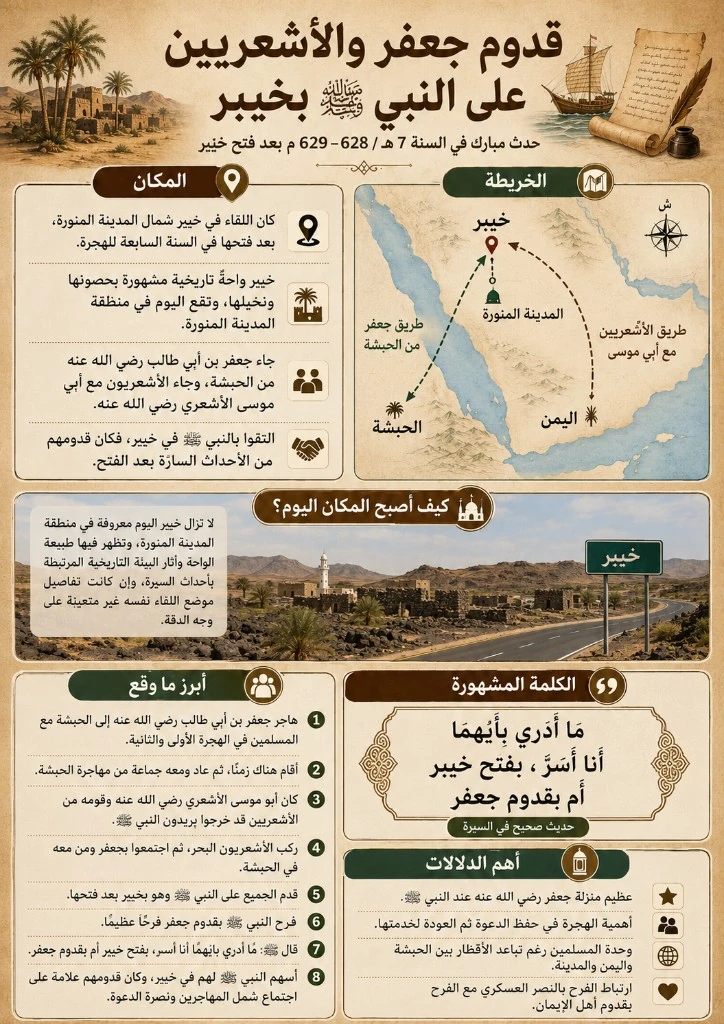
This was the arrival of the emigrants from Abyssinia to the Prophet ﷺ at the time of the conquest of Khaybar. They came with Abu Musa al-Ash'ari and his Companions, and it was a blessed meeting in a time of victory.
Ja'far and his Companions had migrated to Abyssinia, then the Negus (an-Najashi) sent them with Amr ibn Umayyah ad-Damri, so he brought them to the Prophet ﷺ while he was at Khaybar.
The return of the emigrants from Abyssinia after the Negus sent them, and this being linked to the stage of the conquest of Khaybar.
Ja'far and his companions joined the community of Madinah after their arrival, and their arrival was linked to the stage of the conquest of Khaybar.
It records the return of Ja'far and his Companions from Abyssinia and their meeting with the Prophet ﷺ at Khaybar.
It shows the believers gathering around the Prophet ﷺ after the Hijrah and hardship.
It reflects the expansion of the Islamic state and its ability to receive and include those who returned.
It confirms the integration of the emigrants from Abyssinia with the Madinan community.
It instills the meaning of joy in obedience and in meeting on faith.
It shows the Muslim community staying connected through migration, return, and organization.
The event was linked to the stage of the conquest of Khaybar and the strength that came with it for the Muslims.
He came to the Prophet ﷺ with his companions among the emigrants from Abyssinia
He came with the Ash'aris to the Prophet ﷺ
They came with Ja'far to the Prophet ﷺ
They came with Abu Musa to the Prophet ﷺ
Joy at the coming of the believers and at Allah's victory.
Giving the returnees a good welcome and valuing their sacrifices.
The cohesion of the emigrants, the Ansar, and all the believers.
Unity of leadership and authority in the hands of the Prophet ﷺ.
Including the newcomers in the war booty points to fair distribution.
Teaching the ummah that migration and returning for the sake of Allah have great status.
Organizing gifts and shares within one community.
Building a society that makes room for emigrants and includes them in the Message's project.
The return of individuals or groups after a long absence to their institutions or communities.
Welcoming returnees, valuing their role, and integrating them fairly.
The importance of embracing returning talents and linking them to the common project.
Strengthening social unity and not neglecting newcomers.
Rejoicing in the return of good people and staying connected to the righteous community.
Application is limited to general meanings without unfounded extrapolations.
The Prophetic context is tied to revelation, Prophetic leadership, and the events of the ghazwah.
Welcome those who return to good, and include them in ways that achieve justice and unity.

