 المساعد الذكي
جارٍ تحميل القصة…

ز
مرحبًا زائرThe Treaty of Hudaybiyyah in Dhu al-Qa'dah of Year 6 after the Hijrah
The Treaty of Hudaybiyyah took place in Dhu al-Qa'dah of Year 6 after the Hijrah. It was described as a clear victory and marked a shift from confrontation to a broader phase of stability and da'wah.

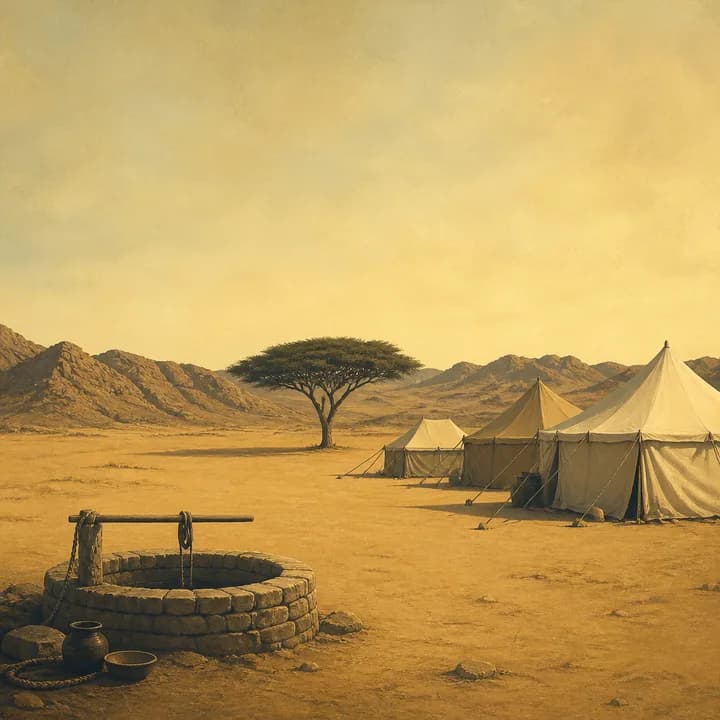
بنودٌ بدت خسارة، فكانت فتحًا مبينًا فتح الطريق لكل ما بعده.
The Treaty of Hudaybiyyah took place in Dhu al-Qa'dah of Year 6 after the Hijrah. It was described as a clear victory and marked a shift from confrontation to a broader phase of stability and da'wah.
It marks a major turning point in the Madinan period, from the stage of establishment and confrontation to the stage of peace, then spread and the call to Islam.
And in Dhu al-Qa'dah of this year: the Treaty of Hudaybiyyah took place, and it was a clear victory.
This means that the Muslims made a treaty with Quraysh at Hudaybiyyah. The treaty had a major impact on the strength of the Muslims and the spread of the call to Islam, so it was described as a clear victory.
The Muslims had gone through stages of turmoil, trials, and the advance of enemies, then this stage ended with the signing of the Treaty of Hudaybiyyah.
The Muslims' position and strength had developed, and a new stage of da'wah was preparing after confrontation.
The Seerah moved into a stage dominated by reconciliation, da'wah, sending letters and envoys, instead of direct military confrontation.
One of the most important milestones in the Seerah during the Madinan period.
It opened the door to the call to Islam on a wider scale.
It demonstrated the strength of the Muslims and brought them into a phase of peace with Quraysh.
It reduced the intensity of the conflict and established a measure of stability.
It teaches patience and sound judgment about outcomes.
It helped the call to Islam move from a phase of defense to a phase of building and spread.
It paved the way for inviting kings and delegations and for the Conquest of Makkah.
Party to the peace agreement and the guiding leader of the stage
The other party to the peace agreement
Wisdom and keeping one's promise are among the meanings of this event.
The possibility of turning conflict into relative stability that serves society.
Reconciliation is one of the tools for consolidating strength and achieving public interest.
Teaching us to look at outcomes, not appearances alone.
Managing the stage by moving from confrontation to organization and da'wah.
The beginning of Islam's wider influence across the Arabian Peninsula.
A conflict that needs a wise settlement instead of attrition.
Measured de-escalation can be a prelude to greater success.
The importance of phased planning and weighing outcomes.
Reconciliation can open doors to development and stability.
Patience with indirect results.
The contemporary event cannot be compared with the Prophet's event in every detail.
The prophetic context is revelation and guidance, while the modern one is human reasoning.
If a reconciliation achieves a greater benefit and prevents a greater harm, it is a valid option.

